
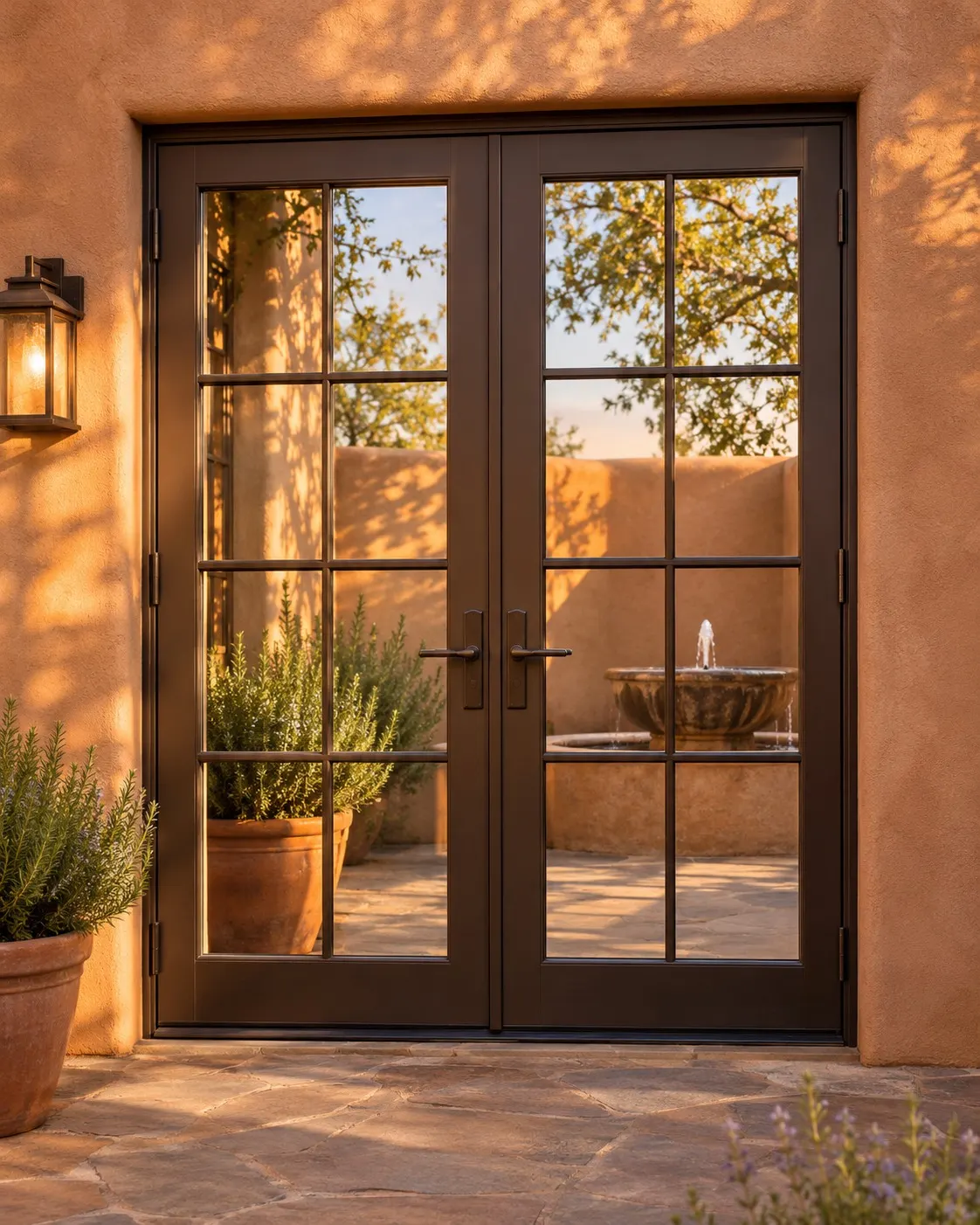
Why old patio doors fail here
A patio door does more work than any window. It opens and closes thousands of times, bears the weight of a large glass panel on two small rollers, and sits at floor level where dust, snowmelt and the occasional monsoon downpour collect. In Santa Fe, fine wind-blown grit wears rollers and tracks faster than in most places. Eventually the door drags, the lock won't line up, and you can feel air coming in at the meeting stile.
At that point, adjusting rollers or replacing weatherstrip may buy time. Often, especially with original aluminum sliders, replacing the whole unit is what actually fixes it.
Door styles we install
- Sliding patio doors: two or more panels, one or more of which slides. They save floor space and open wide. We look for heavy-duty rollers, a track that's easy to clean, and multi-point locks.
- Hinged French patio doors: one or two swinging panels. They seal tightly when closed, which is a big plus on the windy side of the house, and fit traditional Santa Fe styles well.
- Multi-panel and stacking doors: larger openings with three or four panels for homes that want a wide connection to a portal or courtyard. These often involve more structural and opening work.
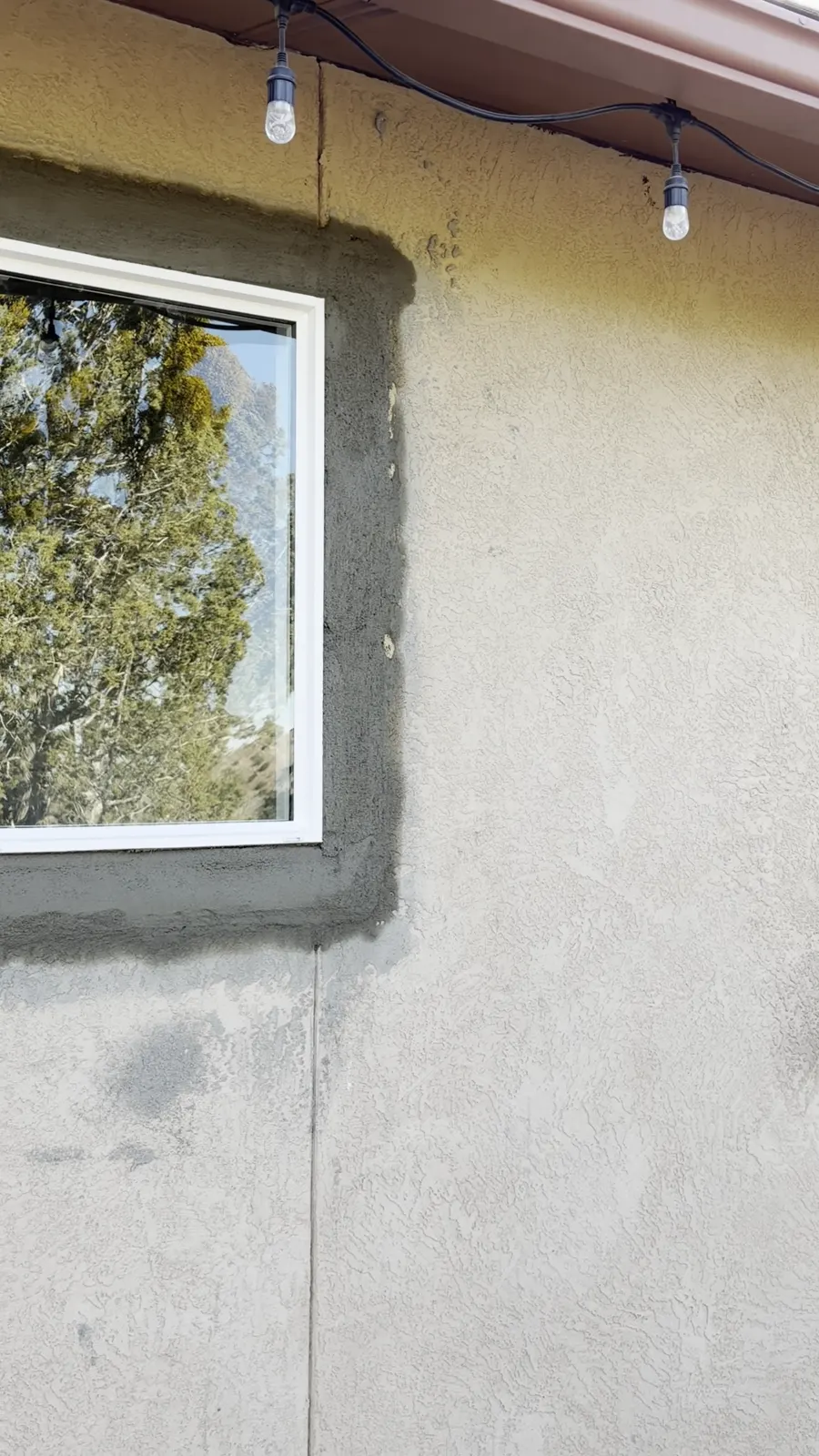
The sill pan is not optional
Water that reaches the bottom of a door opening has to go somewhere. Without a properly sloped and sealed sill pan underneath the door, it goes into the subfloor or slab edge. Many of the rotted floors we see next to old patio doors trace back to a missing or failed pan. Every patio door we install sits on a pan that drains to the outside.
Portals, steps and thresholds
Many Santa Fe patio doors open onto a portal, flagstone or brick patio. If the outside surface has settled or slopes toward the house, water ends up against the door. We check that relationship and recommend fixes or a threshold height that keeps water outside. Where the door opens onto a step down, we account for that in the sill and threshold choice.
Glass for big openings
Patio doors are mostly glass, so the glass package matters a lot for comfort. All patio door glass is tempered for safety. We pair it with Low-E coatings suited to the direction the door faces: higher solar gain for a south-facing door that should warm the room in winter, lower solar gain for a west-facing door that roasts the room in July. Blinds-between-glass options are available on some doors for privacy without dusting.
Security
Older sliders can often be lifted off their tracks or forced at a single-point latch. Modern doors use multi-point locking, anti-lift blocks and reinforced keepers. If security matters to you, tell us. We'll show you the hardware options and their differences.
Converting a slider to French doors, or the reverse
It's often possible to swap styles within the same rough opening. Going from a slider to hinged doors means thinking about swing space inside or out; going from hinged doors to a slider frees up floor space. If the opening size changes, framing and stucco work are involved. We'll measure, look at the header, and tell you what's practical.
Questions we hear about this
Can you replace a patio door without tearing out the stucco?
Sometimes. If the existing frame is sound and the door is a compatible type, a retrofit-style replacement may be possible. Many patio doors, especially those with water damage below, are better replaced full-frame with a stucco cut-out and a new sill pan.
How many days does a new patio door take to put in?
The door itself is usually installed in a day. Stucco patching and finishing, if needed, add time for each coat to cure. We secure the opening at the end of each day.
Which is better in wind: a slider or French doors?
Hinged French doors compress against their weatherstripping when closed and typically seal tighter in strong wind. Quality sliders with good interlocks and weatherstrip perform well too. Exposure and how you use the door both matter.
Do you install pet doors in patio doors?
Some patio doors are available with built-in pet door panels or can accept one. Let us know when we measure, and we'll check what the manufacturer allows without voiding the warranty.