
What's wrong with the old one
Entry doors fail in a few familiar ways around here. Wood doors on south and west exposures dry out, crack and lose their finish under the sun. The bottom of a door under a portal roof soaks up snowmelt year after year until the skin delaminates or the bottom rail rots. Hinges sag, the deadbolt stops lining up, and daylight shows under the threshold. Each problem can be patched, but a door that's showing all of them is ready to go.
Materials
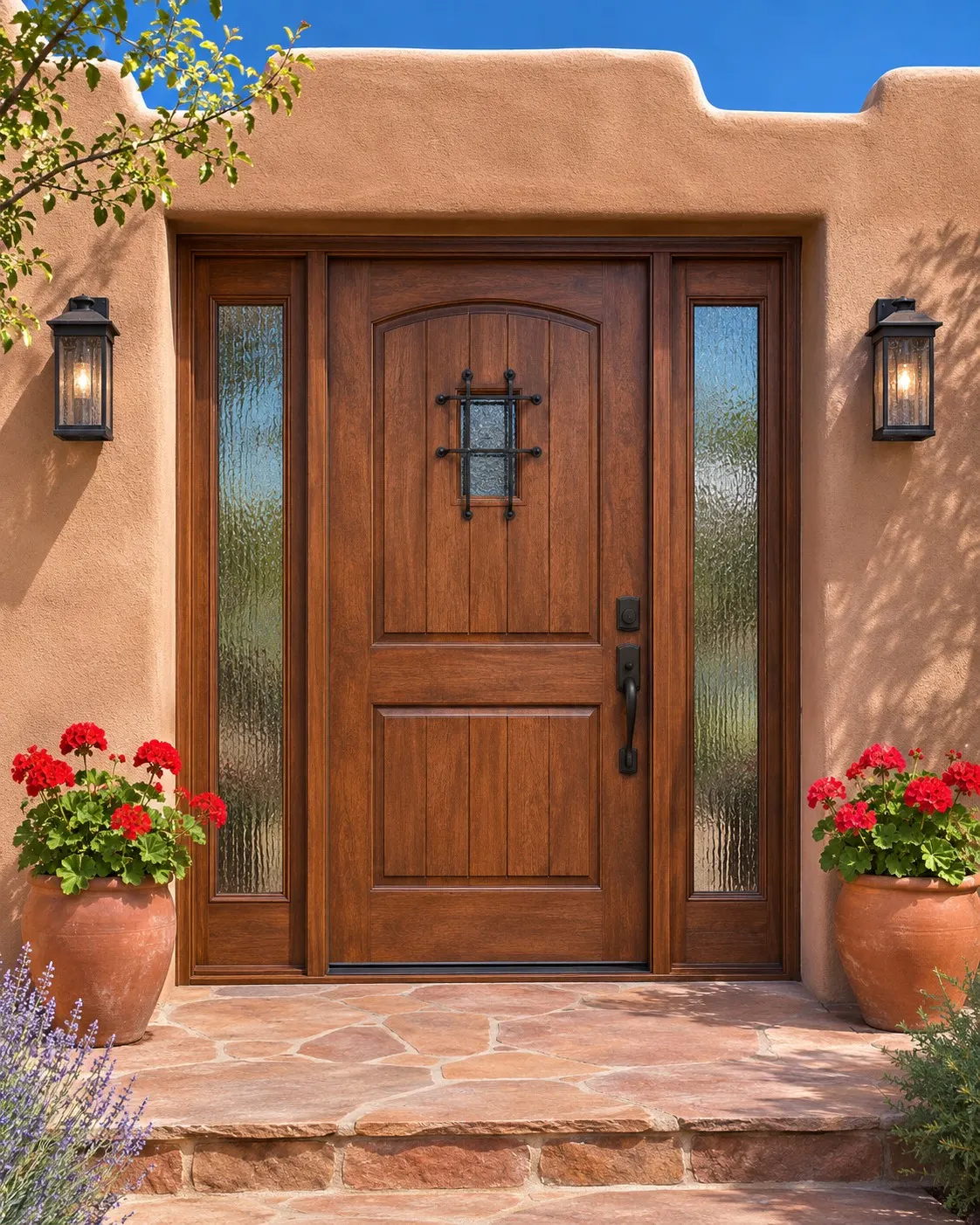
- Fiberglass: our most common recommendation. It doesn't rot, dent or rust, holds paint and stain finishes well, and insulates much better than solid wood. Wood-grain fiberglass can be stained to look remarkably like real wood, which suits Santa Fe styles.
- Steel: strong, secure and economical. Steel works well where the door is protected from direct sun, since dark steel doors in full sun get very hot.
- Wood: beautiful and traditional, but it needs regular care in this climate. If you want real wood, we'll talk about exposure, finish and maintenance honestly.
Sidelites, transoms and glass
Sidelites (narrow glass panels beside the door) and transoms (glass above) bring light into dark entries. Decorative and privacy glass options let light in without showing the whole hallway to the street. All door glass is tempered, and insulated glass in sidelites keeps the entry from becoming a cold spot.
Pre-hung replacement and the frame
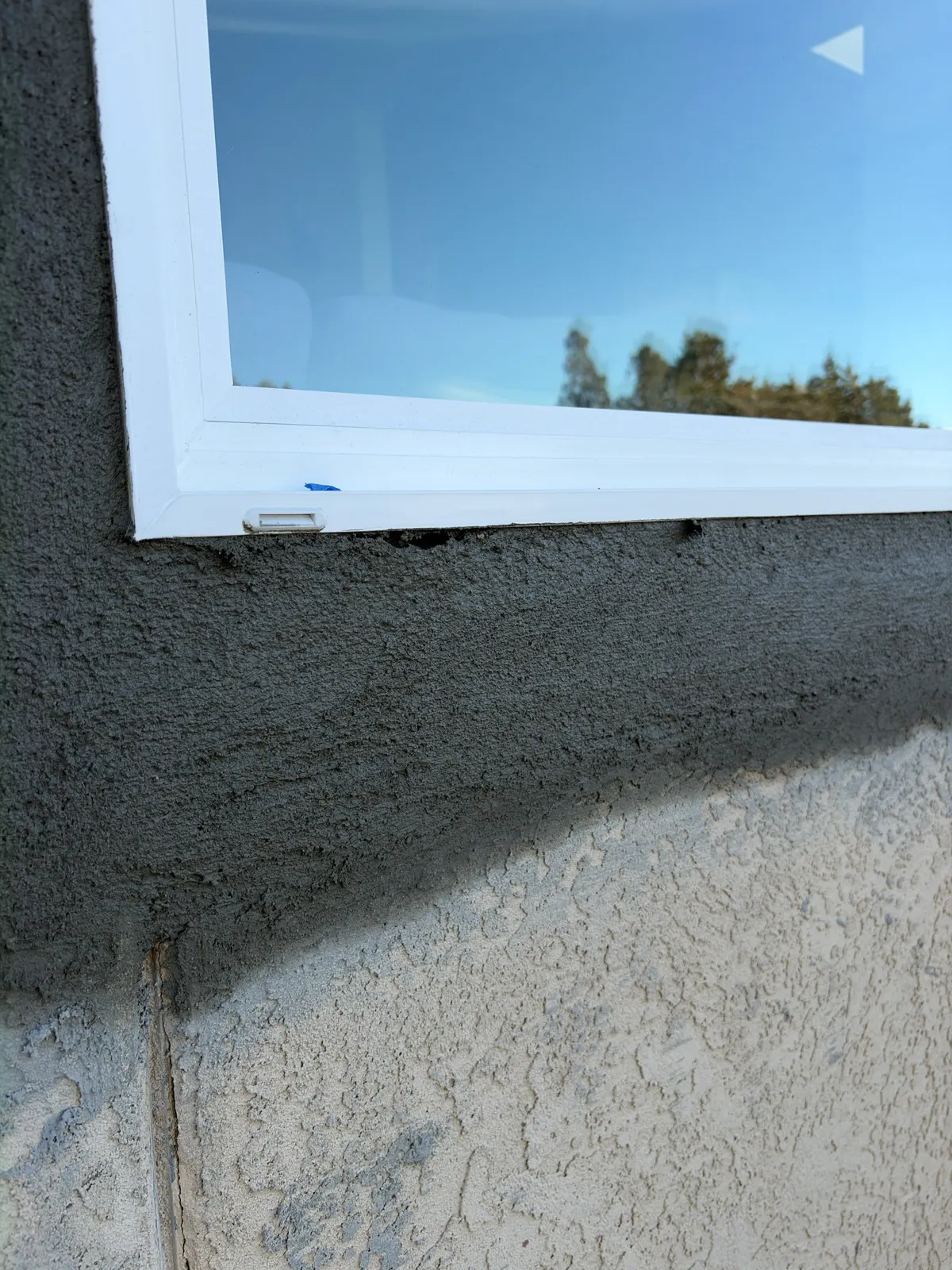
Most entry door replacements we do are pre-hung: the door comes already mounted in a new frame with hinges and weatherstripping. We remove the old door and frame, check the opening and the sill area for damage, install a sill pan, set the new unit plumb and square, and air-seal it to the rough opening. Interior casing is reinstalled or replaced, and the exterior is sealed or patched to match.
Thresholds and snowmelt
The threshold is where entry doors leak. Snow sliding off a portal roof melts against the door; wind drives rain under the sweep. We use adjustable thresholds, a sill pan beneath them, and a door bottom sweep that actually touches. If the outside landing slopes toward the door, we'll point it out, because no threshold can fully stop water that's pooling against it.
Hardware and security
Hardware is part of the quote: handlesets, deadbolts, and multi-point locks on doors that offer them. Multi-point locks engage the frame at several points, which improves security and helps the door seal evenly top to bottom. If you'd like a smart lock, we'll make sure the door prep fits it.
Styles that suit Santa Fe homes
Plank-style doors, doors with a small speakeasy window, simple paneled doors and contemporary glass-and-panel designs all work here, depending on the house. We'll bring options that fit your home's architecture, and if you're in a historic district or an HOA with design rules, we'll put together the specs you'll need for approval.
Questions we hear about this
Is a fiberglass door really better than wood?
For most Santa Fe exposures, yes. It won't crack, warp or rot in the sun and dry air, and it insulates better. Wood-grain fiberglass can be stained to look very close to wood. If you love real wood, it can work with the right finish and regular care.
Can you replace just the door and keep the frame?
Sometimes, if the frame is in good condition and square. Most of the time a pre-hung replacement with a new frame gives a better seal and longer life, especially when the threshold area has been wet.
How long does an entry door replacement take?
Typically one day for the door itself. Custom doors may take several weeks to order. Exterior stucco or trim finishing, if needed, can add time.
Will a new door fit my existing opening?
Standard sizes fit most openings. Older and custom homes sometimes have non-standard openings, in which case we order a custom-sized door or adjust the opening. We measure carefully before ordering.